Parenting Behind the Print
Navigating Family Court and Child Support Debt After Incarceration in California
You can spend years imagining the first hug, the first dinner, and the chance to show up as a parent outside a visiting room—then come home to a child-support balance, old arrears, interest, or a collection notice before anything else feels stable.
That paperwork can make it feel like the family is being punished twice. The first move is not panic. It is building a timeline: what was legally due, what should have stopped during qualifying confinement, what interest belongs to older debt, and what can be reviewed now.
What You Need to Know Now
Qualifying confinement can stop support. California Courts says that, starting September 27, 2022, child support generally stops automatically when the paying parent is confined against their will for more than 90 consecutive days and does not have money available to pay.
There are exceptions. The automatic stop does not apply in every case, including when the parent has the ability to pay or is confined for nonpayment of support or for domestic violence against the other parent or child.
Support can restart later. Current California Courts guidance says the old support amount restarts on the first day of the 10th month after release unless the court acts sooner—for example, after employment or a modification request.
Old arrears still matter. Unpaid California child support accrues 10% annual interest. Government-owed arrears may qualify for California's Debt Reduction Program, but current support and arrears owed directly to the other parent are not reduced by that program.
Parenting Behind the Print
Season 1 · Episode 7

Coming Home Can Bring a Bill Before It Brings Stability
Child support and custody are emotional issues. The account, however, needs a timeline. Before arguing about the balance, find out what the order was, when confinement began, when release occurred, what payments were credited, and whether qualifying confinement relief was applied.
The only reliable balance is the one attached to the actual case. Do not assume that every incarcerated parent leaves with the same kind of debt or that every old balance is automatically correct.

Incarcerated Parents Are Not a Small Group
Bureau of Justice Statistics data from the 2016 Survey of Prison Inmates found that 46.9% of state prisoners were parents of at least one minor child. The figure is historical national survey data—not a current California rate—but it shows why family support and parenting issues are a central reentry concern.
The same BJS report estimated that state and federal prisoners reported nearly 1.5 million minor children in 2016.
Four Numbers to Know Before You Rebuild the Case
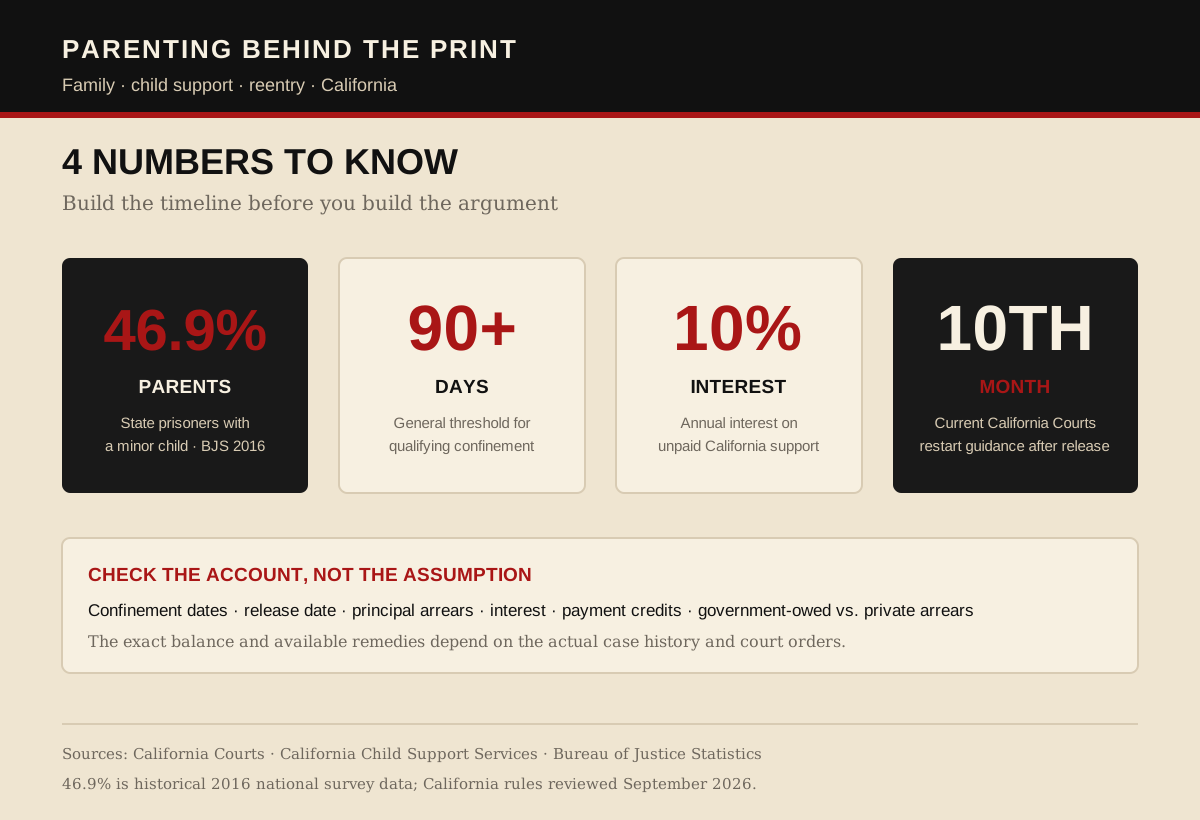
Different numbers, different meanings. The 46.9% figure is historical national BJS data from 2016. The 90-day, 10% interest, and restart rules reflect current California guidance reviewed in September 2026.
California Changed the Rules for Qualifying Confinement
Under current California child-support law and California Courts guidance, support generally stops during qualifying involuntary confinement lasting more than 90 consecutive days when the paying parent does not have money available to pay.
California Courts also identifies relief rules for certain earlier confinement periods. The specific dates matter, which is why confinement and release records should be part of any arrears review.
Make Sure the Account Actually Received the Credit
Automatic relief in the law does not mean the account will always look correct without review. California Courts instructs formerly confined parents to make sure the court or local child support agency knows about the confinement so the account can receive the proper credit.
If a local child support agency is involved, ask for a complete account review and provide proof of confinement. If the agency is not involved, California Courts provides a separate court process for asking a judge to update the order and arrears.
Interest Can Make Old Debt Grow Fast
California Courts says unpaid child support accrues interest at 10% per year. That means a balance can grow even when the original monthly support order has ended.
The practical question is not just “What is the balance?” Ask for the breakdown: principal arrears, interest, current support, payments credited, and whether any portion is owed to the government rather than directly to the other parent.
The Debt Reduction Program Has a Narrow Job
California's Debt Reduction Program can help some parents settle qualifying child-support debt owed to the government for less than the full amount. Eligibility and settlement amounts depend on factors such as income, assets, family size, and local cost of living.
The program does not erase current monthly support, private arrears owed directly to the person receiving support, or spousal-support arrears. It is a tool for a specific category of government-owed debt—not a universal child-support forgiveness program.
Six Moves Before the Next Court Date or Review
- Request the full account history. Ask for the current balance, principal, interest, payment history, and who each portion of the debt is owed to.
- Document confinement and release dates. Use official records, parole documentation, or other proof accepted by the court or local child support agency.
- Check whether confinement credit was applied. Compare the account with the qualifying periods identified in current California guidance.
- Plan for the restart date. If the old support amount will be unrealistic after release, ask about modification before new debt begins accumulating.
- Separate support from parenting time. Use family-court resources for custody or visitation and child-support resources for the financial order.
- Ask whether government-owed arrears qualify for debt reduction. If they do, complete the application with current income, assets, household, and expense information.
The Goal Is an Accurate Account and a Workable Plan
Child-support debt can feel like a judgment about your worth as a parent. Legally, it is an account built from orders, dates, payments, interest, and specific statutory rules.
Get the account right first. Then deal with the payment plan, modification, debt-reduction options, custody, or visitation using the correct process for each issue.
Showing up for your children and fixing an old support account are not the same task—but both can be part of rebuilding a family after incarceration.
Sacramento Starting Point
California Child Support Services — Sacramento: the Sacramento local agency is at 3701 Power Inn Road, Sacramento. For case information or to reach the agency handling your case, call Customer Connect at 1-866-901-3212. Find the Sacramento office ↗
Verified Sources & Further Reading
- California Courts — Guide to Child Support for Incarcerated Parents
- California Courts — Updating an Order When the Local Child Support Agency Is Involved
- California Courts — Updating an Order Without the Local Child Support Agency
- California Courts — Paying Child Support and 10% Interest on Arrears
- California Child Support Services — Debt Reduction Program
- Bureau of Justice Statistics — Parents in Prison and Their Minor Children, Survey of Prison Inmates 2016
- California Family Code § 4007.5
Support Independent Reentry Media
Collateral Consequences turns complicated rules into practical information people can actually use. Your support helps fund research, production, outreach, and future reporting on the barriers that continue after incarceration.
Support Collateral Consequences on Givebutter →
With appreciation to BAVC Media for serving as the fiscal sponsor of Collateral Consequences: Freedom's Fine Print and supporting this independent media project.
Need Reentry Resources?
The Reentry Village connects people with practical resources for housing, employment, healthcare, identification, education, recovery, legal assistance, benefits, transportation, and family stability.
Collateral Consequences: Freedom's Fine Print is hosted by Larenzo and fiscally sponsored by BAVC Media.
Educational and informational content only. This article is not individualized legal advice. Child-support balances, confinement credits, interest, modification, custody, and visitation depend on the facts and orders in a specific case. Rules can change. Confirm current information with the court, local child support agency, family-law facilitator, or a qualified attorney.