The ID Crisis
How to Navigate the DMV and Reclaim Your Identity After Incarceration
Try starting a job, opening a bank account, signing a lease, filling a prescription, or completing benefits paperwork without valid identification. Suddenly every ordinary task becomes a chain of catch-22s.
The ID crisis is not dramatic because one card is complicated. It is dramatic because so many other systems depend on that card being there.
What You Need to Know Now
CAL-ID starts before release. CDCR's California Identification Card Program is available at all state institutions and can begin within 13 months of release for eligible participants.
Eligibility is specific. CDCR says a person must have a Social Security number and must previously have been issued a California ID card or driver's license.
Fee help exists after release. California DMV currently lists a reduced-fee ID card at $11 for qualifying low-income applicants verified through an approved agency, and a no-fee ID card for qualifying unhoused applicants.
Bring the right documents the first time. DMV requires identity verification, a Social Security number, and—when applicable—California residency documentation. Name mismatches can stop the transaction until legal name-change documents are provided.
The ID Crisis
Season 1 · Episode 8


One Missing Card Can Stop an Entire Reentry Plan
A valid ID sits underneath almost every other reentry task. Employers use it for onboarding. Banks use it to verify identity. Housing providers ask for it. Benefits and health systems often need it. Transportation, school enrollment, and other services can depend on it too.
That is why identification belongs near the front of a reentry plan, not at the bottom of the list after everything else has already stalled.

CAL-ID Can Start While a Person Is Still Inside
CDCR says the CAL-ID Program is available at all state institutions and is designed to provide eligible incarcerated people with a valid California identification card upon release.
The program is available within 13 months of release. Eligibility requires a Social Security number and a previously issued California ID card or driver's license.
Four Numbers That Can Save Time at the DMV
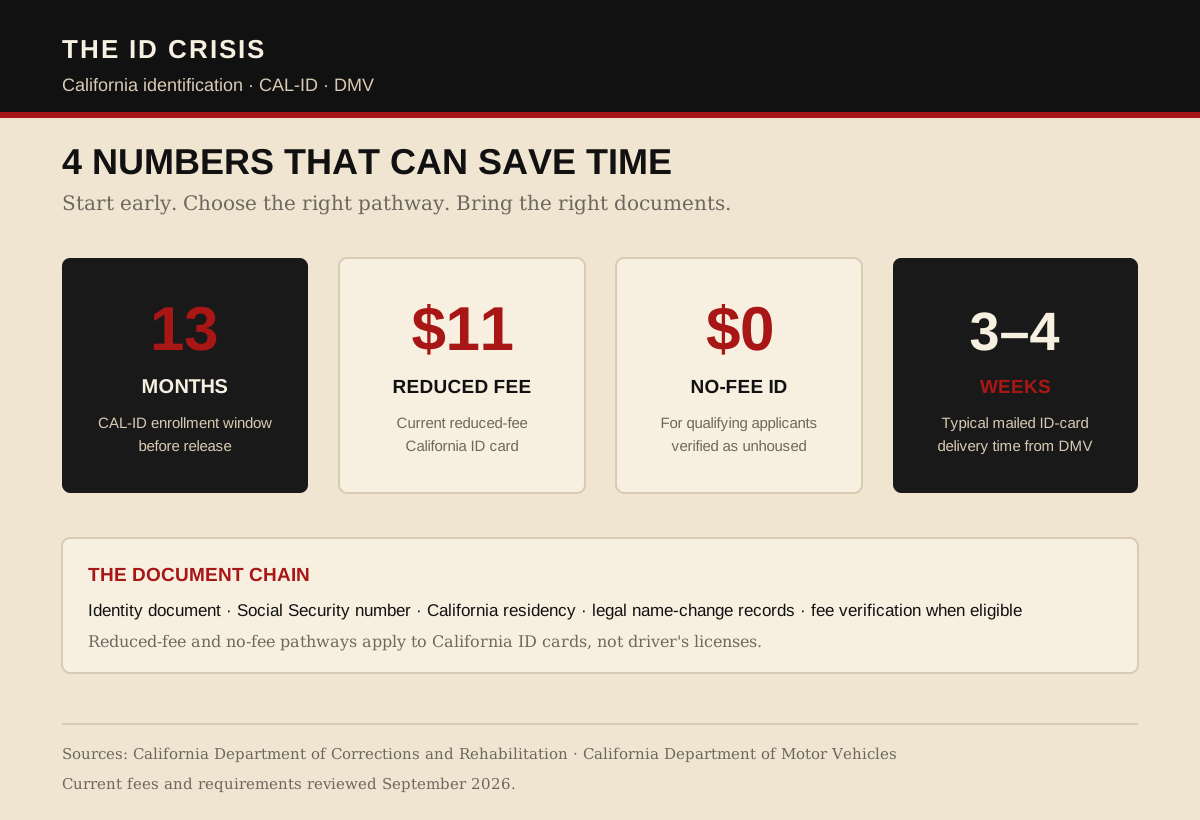
Current California figures reviewed September 2026. Reduced-fee and no-fee pathways apply to California identification cards—not driver's licenses—and require eligibility verification through the appropriate program or agency.
Fee Help Exists on the Outside Too
California DMV currently lists a reduced-fee identification card at $11 for qualifying low-income applicants. Eligibility must be verified through a participating government public-assistance agency or approved nonprofit, which issues the DL 937 verification form.
People who meet the applicable definition of homelessness may qualify for a no-fee California identification card through a participating agency using the DL 933 verification form.
These reduced-fee and no-fee programs apply to identification cards, not driver's licenses.
Document Problems Are Easier to Fix Before You Reach the Counter
DMV requires identity verification and a Social Security number for a standard California ID application. If you have never had a California driver's license or ID card, DMV also requires acceptable California residency documentation.
For REAL ID, the requirements are stricter: identity, Social Security information, and two proofs of California residency are required. If the name on your identity document does not match your current legal name, bring the certified document that connects the names.
Name Mismatches Can Become Their Own Barrier
A small difference between documents can stop the process. Marriage, divorce, adoption, court-ordered name changes, or older records may leave different names across your paperwork.
Do not wait until you are standing at the counter to discover the mismatch. Compare the name on your identity document, Social Security information, residency records, and DMV application in advance.
Do Not Confuse Standard ID With REAL ID
A California identification card proves identity for many everyday purposes. A REAL ID is a federally accepted credential used for purposes such as boarding domestic commercial flights and entering certain federal facilities.
If immediate reentry needs are the priority, make sure you understand which credential the next task actually requires before spending time gathering extra documentation.
Six Moves Before You Go to DMV
- Ask about CAL-ID before release. If you are within 13 months of release, have a Social Security number, and previously had a California DMV credential, ask whether you qualify.
- Choose the right ID pathway. Decide whether you need a standard California ID, REAL ID, replacement credential, or another DMV transaction.
- Check every name. Make sure your identity, Social Security, residency, and name-change documents connect correctly.
- Use the DMV document checklist. Confirm exactly what documents apply to your transaction before going to the field office.
- Ask about fee assistance. If cost is a barrier, contact a county public-assistance agency or participating nonprofit about DL 937 or DL 933 eligibility.
- Keep copies and track the card. Save confirmation paperwork. DMV says a new ID card is generally mailed within three to four weeks; if it has not arrived after 60 days, check its status.
Identity Is Infrastructure
An ID card does not create a job, a home, a bank account, or health coverage. It does something more basic: it lets you get through the front door of those systems.
That is why the strongest strategy is early and practical. Start CAL-ID while still inside when eligible. Gather missing documents before release. Use fee assistance when cost is the barrier. Check names before the DMV appointment.
One card should not control an entire reentry plan—but until the rest of the system changes, getting that card early can keep the rest of the plan moving.
Sacramento Starting Point
2-1-1 Sacramento Reentry Documents: the local reentry guide includes starting points for California photo ID, birth certificates, Social Security cards, and other release documents. Dial 2-1-1 or 916-498-1000. Open reentry document resources ↗
Verified Sources & Further Reading
Support Independent Reentry Media
Collateral Consequences turns complicated rules into practical information people can actually use. Your support helps fund research, production, outreach, and future reporting on the barriers that continue after incarceration.
Support Collateral Consequences on Givebutter →
With appreciation to BAVC Media for serving as the fiscal sponsor of Collateral Consequences: Freedom's Fine Print and supporting this independent media project.
Need Reentry Resources?
The Reentry Village connects people with practical resources for housing, employment, healthcare, identification, education, recovery, legal assistance, benefits, transportation, and family stability.
Collateral Consequences: Freedom's Fine Print is hosted by Larenzo and fiscally sponsored by BAVC Media.
Educational and informational content only. DMV fees, document requirements, CAL-ID eligibility, program forms, and agency procedures can change. Confirm current requirements with CDCR, California DMV, or the participating agency handling your application.