The Mindset Shift
Mental Health, Institutionalization, and Coming Home
The prison gate can open before your nervous system believes it.
Reentry conversations usually focus on visible barriers—jobs, housing, debt, IDs, background checks. But years spent in an environment built around surveillance, rigid routines, threat awareness, and limited control can shape how a person reacts long after release.
What You Need to Know Now
There is no single diagnosis called “reentry.” Experiences such as anxiety, depression, sleep disruption, trauma-related symptoms, isolation, anger, substance-use concerns, or difficulty adjusting should be evaluated on their own terms rather than automatically labeled with one diagnosis.
California has expanded behavioral-health pathways. Eligible people can receive behavioral-health services, medications, care management, and warm handoffs through the Justice-Involved Reentry Initiative before release.
Peer support is a real Medi-Cal benefit. Sacramento participates in Medi-Cal Peer Support Services in both Specialty Mental Health Services and the Drug Medi-Cal Organized Delivery System.
Peer support and clinical care serve different roles. Lived-experience support can reduce isolation and help with navigation, while severe, worsening, or crisis symptoms may require licensed clinical or emergency support.
The Mindset Shift
Season 1 · Episode 9


The Prison Gate Can Open Before Your Nervous System Believes It
A minor correction from a supervisor can feel like a confrontation. A crowded store can feel unsafe. Silence can make sleep harder instead of easier. Relationships can become complicated because habits that protected you inside do not always fit the world outside.
Those reactions deserve to be taken seriously. They also deserve more precision than assuming everyone who has been incarcerated has the same diagnosis or needs the same kind of treatment.

There Is No Single Diagnosis Called Reentry
The phrase “post-incarceration syndrome” appears in some advocacy and popular writing, but it is not a formal diagnosis in the Diagnostic and Statistical Manual of Mental Disorders.
A more useful approach is to name the actual experience: anxiety, depression, trauma-related symptoms, disrupted sleep, substance-use concerns, anger, isolation, relationship difficulty, or adjustment stress.
Different people leave incarceration with different histories, strengths, symptoms, and support systems. Treatment should start with what is happening now—not with an assumption that one label fits everyone.
Four Doors Into Support
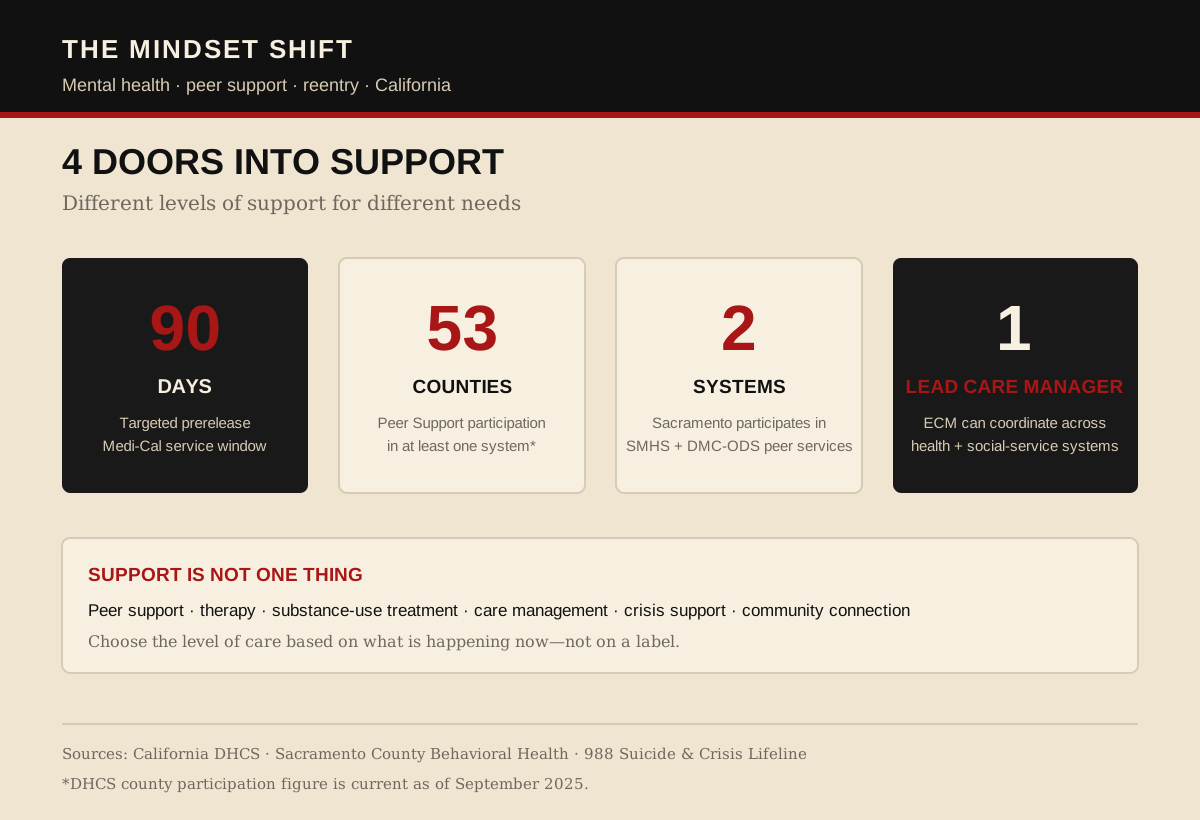
Access points—not diagnoses. These numbers describe California service pathways. Eligibility and available providers depend on the person, county, health plan, and level of need.
California Has More Pathways to Lived-Experience Support
California's Medi-Cal Peer Support Services benefit allows participating counties to use certified peer specialists within Specialty Mental Health Services and Drug Medi-Cal systems.
DHCS lists 53 counties as participating in at least one delivery system as of September 2025. Sacramento participates in both Specialty Mental Health Services and the Drug Medi-Cal Organized Delivery System.
Peer specialists bring lived experience with recovery and system navigation. That can make it easier to ask questions, build trust, and work through practical barriers without having to explain every part of the experience from the beginning.
Enhanced Care Management Can Add One Person to Coordinate the Pieces
For eligible high-need Medi-Cal members, Enhanced Care Management can provide a single lead care manager who coordinates across physical health, mental health, substance-use treatment, dental care, social services, and other needs.
People transitioning from incarceration are one of the populations that may qualify. That coordination can matter when the problem is not one appointment but several systems that all expect the person to navigate them at the same time.
Treat Support Like Part of the Reentry Plan
Find people who understand reentry. Peer groups, mentors, and community support can reduce isolation and create a place to talk without translating every part of incarceration culture first.
If anxiety, anger, depression, sleep problems, trauma symptoms, or substance-use concerns are affecting work or relationships, ask your Medi-Cal plan, care manager, county behavioral-health system, or clinic for appropriate behavioral-health care.
Track what triggers overload, what helps you regulate, and what progress looks like over time. A pattern written down is easier to explain to a clinician, peer specialist, or care manager than a general feeling that “everything is too much.”
Know the Difference Between Support and Crisis Care
Peer support can be a powerful bridge. It is not a substitute for crisis services or clinical care when symptoms are severe or worsening.
The 988 Suicide & Crisis Lifeline is available 24/7 by call, text, or chat for people experiencing emotional distress, mental-health or substance-use concerns, or suicidal crisis. You do not have to be suicidal to contact 988.
Six Moves to Build a Mental-Health Reentry Plan
- Name what is actually happening. Identify the situations or symptoms disrupting sleep, work, relationships, decision-making, or recovery.
- Track patterns for two weeks. Note sleep, stress, triggers, substance use, conflict, isolation, and what helps you regulate.
- Ask for peer support. If you use Medi-Cal, ask whether certified peer services are available through the county behavioral-health or substance-use system.
- Ask for clinical care when needed. Request a licensed clinician when symptoms are persistent, worsening, or interfering with daily life.
- Use care management if you qualify. Ask your Medi-Cal plan whether Enhanced Care Management is available for your reentry needs.
- Know the crisis option. Save 988 in your phone. Call, text, or chat when immediate emotional or behavioral-health support is needed.
Coming Home Is an Adjustment Process
Some of the hardest reentry barriers do not show up on a background check. They show up in sleep, relationships, reactions, trust, anger, fear, isolation, and the constant work of deciding what habits still protect you and which ones now hold you back.
That does not mean every difficult day is a disorder. It means adjustment deserves the same planning and support as housing, employment, identification, and health care.
Adjustment is gradual. Safety, support, and self-awareness create room to choose which survival habits still serve you and which ones can finally be set down.
Sacramento Starting Point
Sacramento County Behavioral Health Screening & Coordination: call 916-875-1055 to request screening and connection to county mental-health services. For immediate emotional or behavioral-health crisis support, call or text 988. See county access information ↗
Verified Sources & Further Reading
- California DHCS — Justice-Involved Reentry Initiative
- California DHCS — Medi-Cal Peer Support Services and Participating Counties
- California DHCS — Enhanced Care Management for Individuals Transitioning From Incarceration
- Sacramento County Behavioral Health — Peer Support Specialists
- 988 Suicide & Crisis Lifeline — Call, Text, and Chat Support
Support Independent Reentry Media
Collateral Consequences turns complicated rules into practical information people can actually use. Your support helps fund research, production, outreach, and future reporting on the barriers that continue after incarceration.
Support Collateral Consequences on Givebutter →
With appreciation to BAVC Media for serving as the fiscal sponsor of Collateral Consequences: Freedom's Fine Print and supporting this independent media project.
Need Reentry Resources?
The Reentry Village connects people with practical resources for housing, employment, healthcare, identification, education, recovery, legal assistance, benefits, transportation, and family stability.
Collateral Consequences: Freedom's Fine Print is hosted by Larenzo and fiscally sponsored by BAVC Media.
Educational and informational content only. This article is not individualized medical or mental-health advice and does not diagnose any condition. Behavioral-health eligibility, county programs, provider availability, and treatment needs vary. For urgent safety concerns, use appropriate emergency services; for emotional or behavioral-health crisis support, call or text 988.