The Rental Gauntlet
How to Find Housing With a Criminal Record in California
You have the job. You saved the deposit. You can show that the rent is affordable. Then the application moves from income and references to criminal history, and suddenly the entire conversation changes.
That is the rental gauntlet: the feeling that one old record can outweigh everything you have done since. But California housing providers do not have unlimited power to use criminal history however they want.
What You Need to Know Now
Blanket criminal-history bans are prohibited. California's Civil Rights Department says housing providers cannot simply refuse to rent to everyone with a criminal record. A lawful policy must be more narrowly tailored.
Some records are off-limits. California guidance identifies categories housing providers may not seek or consider, including arrests that did not lead to conviction, infractions, certain diversion matters, sealed or expunged records, and juvenile matters.
A conviction must be directly related to a legitimate housing concern. The nature and severity of the conduct and the amount of time that has passed matter. Applicants should also have a meaningful opportunity to present mitigating information.
Tenant-screening reports carry federal rights. If a landlord takes an adverse action because of a consumer report, the Fair Credit Reporting Act requires notice and gives the applicant the right to request a free copy of the report within 60 days and dispute inaccurate information.
The Rental Gauntlet
Season 1 · Episode 4


The Application Can Change the Moment the Background Check Starts
A rental application can feel ordinary until criminal history enters the process. Income, references, and rental history may all look strong, but one screening result can suddenly become the focus.
California fair-housing rules matter at that moment. They do not erase criminal history, and they do not guarantee approval. They do limit how criminal information may be used and prohibit policies that treat every record as the same.

A Criminal Record Is Not a Single Category
California's Civil Rights Department says housing providers cannot use blanket bans against everyone with a criminal record. The rules also prohibit consideration of several categories of information, including arrests that did not result in conviction, infractions, certain diversion matters, sealed or expunged convictions, and juvenile adjudications or matters.
When a housing provider considers a conviction, the analysis should focus on whether that conviction is directly related to a substantial, legitimate, nondiscriminatory housing interest. CRD guidance points to the nature and severity of the conduct and the amount of time that has passed.
The California Rental-Screening Check
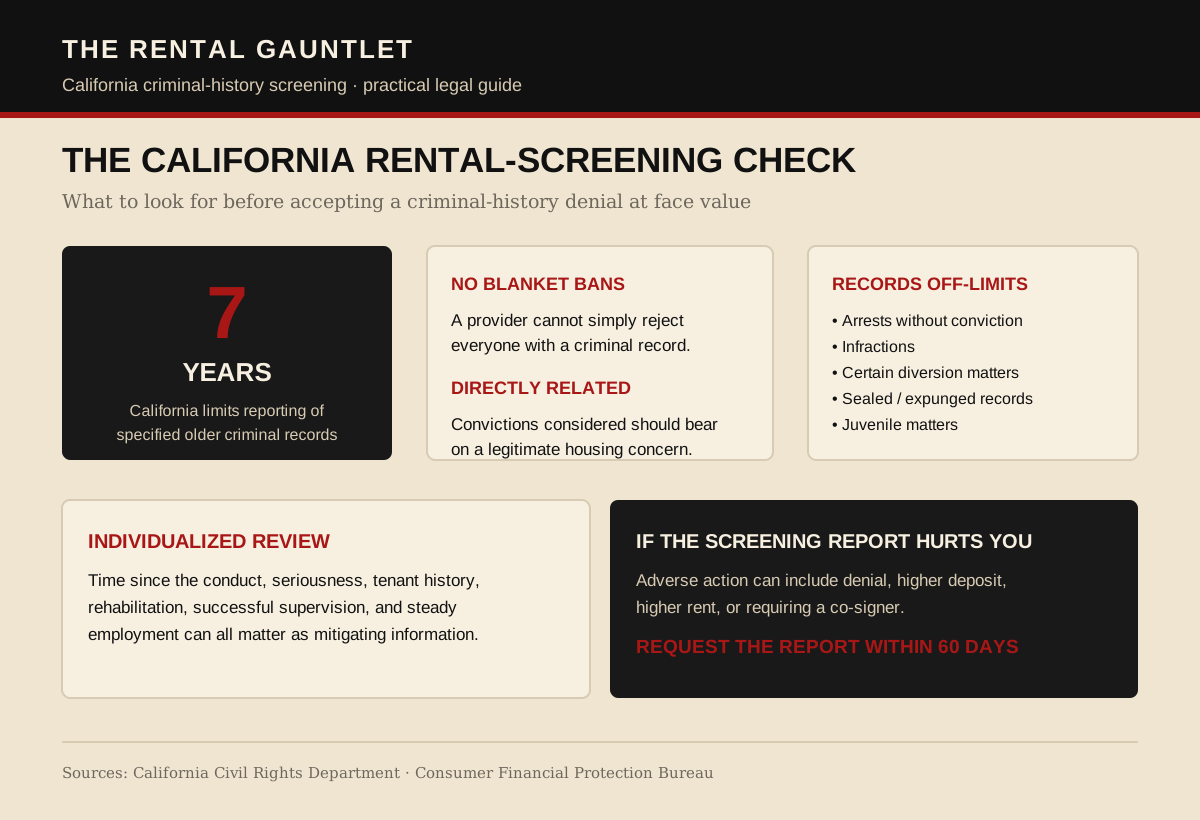
Two systems can matter at once. California fair-housing rules govern how housing providers use criminal history, while consumer-reporting laws govern what screening companies report and what happens when that report is used against you.
The Screening Company Can Be Wrong, Too
Many housing decisions rely on third-party tenant-screening reports. Those reports can contain mismatched identities, duplicate records, outdated information, missing dispositions, or other inaccuracies.
If a landlord denies the application, requires a co-signer, charges a larger deposit, or imposes another unfavorable term because of a tenant-screening report, federal law requires an adverse-action notice. The notice must identify the company that supplied the report and explain the applicant's rights.
You can request a free copy of the report from the screening company within 60 days of the adverse action. If information is inaccurate or outdated, dispute it with the screening company and, when appropriate, the company or court that supplied the incorrect information.
Seven Years Matters—but Know What It Means
California's Civil Rights Department explains that consumer reporting agencies are restricted from reporting specified criminal records when they are more than seven years old measured from the date of disposition, release, or parole. That reporting rule is not the same thing as saying every conviction disappears after seven years.
The practical lesson is to review the report itself. If old or prohibited information appears, do not assume it belongs there simply because a screening company produced it.
Build the Application Before the Screening Happens
Prepare the parts of your housing story that show present-day stability: current income, references, rental history, program completion, education, employment, and rehabilitation evidence. CRD guidance identifies factors such as time since the conduct, good tenant history, successful supervision, rehabilitation, and steady employment as potentially relevant mitigating information.
For Sacramento-area searches, 2-1-1 Sacramento maintains reentry and housing resources that include emergency shelter, low-income housing, transitional housing, supportive housing, and related services.
Six Moves Before You Apply
- Build your rental packet first. Gather pay stubs, identification, references, rental history, and rehabilitation evidence before paying application fees.
- Ask what screening company is used. Knowing the vendor makes it easier to request and dispute the report if something goes wrong.
- Save every notice. Keep denial emails, adverse-action notices, screenshots, application criteria, and anything describing a criminal-history policy.
- Check the report for errors. Look for someone else's record, duplicate entries, missing dispositions, sealed information, and information that may be too old to report.
- Respond with mitigating information. When a lawful criminal-history review occurs, provide credible evidence showing present-day stability and rehabilitation.
- Document blanket policies. If a provider says it will not rent to anyone with a criminal record, preserve the statement and consider contacting the California Civil Rights Department or a qualified housing advocate.
A Screening Report Should Not Be the Whole Story
The goal is not to beat a background-check system with a trick. It is to make sure the decision is based on accurate information, lawful standards, and the person you are now.
A criminal record can still make the housing search harder. But California law draws lines around what can be considered, how it should be evaluated, and what information a tenant-screening company may report. Knowing those lines gives you something concrete to work with when an application goes sideways.
Sacramento Starting Point
2-1-1 Sacramento Housing & Shelter: local emergency shelter, transitional housing, low-income housing, recovery housing, and related referrals. Dial 2-1-1 or 916-498-1000. Open housing resources ↗
Verified Sources & Further Reading
- California Civil Rights Department — Housing rights and criminal-history screening
- California Civil Rights Department — Fair Housing and Criminal History FAQ
- California Civil Rights Department — Fair Housing and Criminal History Fact Sheet
- Consumer Financial Protection Bureau — Review Your Rental Background Check
- Consumer Financial Protection Bureau — Rental denial and adverse-action rights
- 2-1-1 Sacramento — Reentry housing and community resources
Support Independent Reentry Media
Collateral Consequences turns complicated rules into practical information people can actually use. Your support helps fund research, production, outreach, and future reporting on the barriers that continue after incarceration.
Support Collateral Consequences on Givebutter →
With appreciation to BAVC Media for serving as the fiscal sponsor of Collateral Consequences: Freedom's Fine Print and supporting this independent media project.
Need Reentry Resources?
The Reentry Village connects people with practical resources for housing, employment, healthcare, identification, education, recovery, legal assistance, benefits, transportation, and family stability.
Collateral Consequences: Freedom's Fine Print is hosted by Larenzo and fiscally sponsored by BAVC Media.
Educational and informational content only. This article is not legal advice. Fair-housing rules, consumer-reporting requirements, local ordinances, and screening practices can change. Confirm current requirements with the responsible agency or a qualified housing or legal professional.