The Road Map Home
A 30-Day and 90-Day Reentry Plan for California
After an entire season of fine print, the biggest risk is not that there is nothing to do. It is that there is too much to do at once.
Identification. Housing. Medication. Work. Court debt. Licensing. Family. Technology. Mental health. Transportation. The answer is not to solve all of it on release day. The answer is to put the pieces in the right order.
What You Need to Know Now
Stabilize before you optimize. The first priorities are the things most likely to create an immediate crisis: identification, medication and health care, safe housing, income, supervision requirements, transportation, and basic communication.
Build one reentry file. Keep ID records, court paperwork, certificates, references, housing documents, Medi-Cal information, child-support records, employment documents, and important contact information together in one physical binder, secure digital folder, or both.
Use the rules that exist now. California now has stronger protections and pathways around fair-chance hiring, older restitution fines, professional licensing, qualifying fire-camp record relief, and prerelease Medi-Cal. The details and exceptions still matter.
Do not confuse progress with perfection. A stable first month creates room for the longer-term work: education, better employment, record relief, professional licensing, credit, family-court changes, and permanent housing.
The Road Map Home
Season 1 · Episode 10 · Season Finale


Reentry Is a Stack of Systems
This season covered criminal-history rules, restitution, professional licensing, housing, technology, health care, child support, identification, and the psychological transition home.
Each system can feel separate when you are standing in front of it. In real life, they overlap. No ID can slow down employment. No income can destabilize housing. A missed medication refill can affect work. A broken phone can interrupt every appointment at once.
The roadmap works because it treats reentry as one connected system instead of ten unrelated problems.

What the Evidence Says About Structured Support
There is no honest single dollar-for-dollar return that applies to every reentry program. Housing, health care, education, employment, and behavioral-health programs are different interventions serving different populations.
But targeted programs can produce measurable results. A major RAND meta-analysis funded by the U.S. Department of Justice found that people who participated in correctional education had 43% lower odds of returning to prison and were more likely to obtain employment after release than comparable people who did not participate.
The useful lesson is not that every program works equally well. It is that structure, preparation, education, and continuity can matter—and should be evaluated with evidence rather than slogans.
The Road Map Home
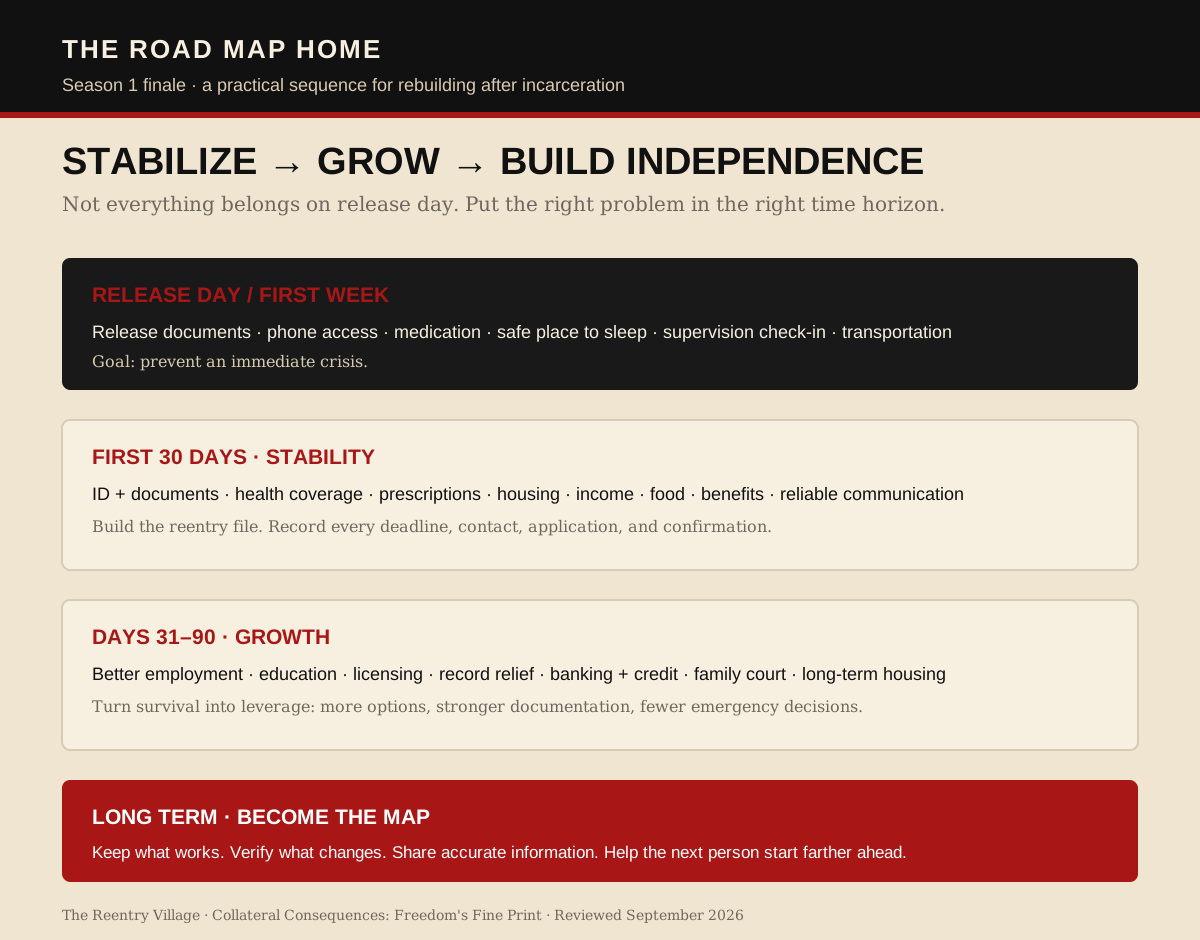
Sequence matters. The categories overlap, but the order helps prevent long-term goals from crowding out the immediate tasks that keep the first weeks stable.
Release Day and Week One: Build the Reentry File
Start with one place for the documents and information that every system keeps asking for. Include identification records, Social Security information, court paperwork, release documents, certificates, references, housing documents, Medi-Cal information, child-support records, employment documents, prescriptions, and key contacts.
Create a secure digital copy of anything difficult to replace. Give files plain names that make sense six months from now. Keep a simple written list of deadlines and confirmation numbers.
Days 1–30: Stabilize the Basics
During the first month, prioritize the systems most likely to become emergencies if they fail: identification, medication and health care, safe housing, income, required supervision appointments, transportation, food, phone access, and basic benefits.
California's Justice-Involved Reentry Initiative now allows eligible people to receive targeted Medi-Cal services for up to 90 days before release, including care management and transition planning. That makes health care one area where the handoff can begin before release rather than after a crisis.
Days 31–90: Build Leverage
Once the first layer is stable, move to the steps that expand future options: better employment, education, credit and banking, occupational licensing, record relief, family-court modifications, and longer-term housing.
This is also where knowing current California law matters. The Fair Chance Act generally delays conviction-history screening until after a conditional job offer and requires a process before an offer is withdrawn. AB 2138 limits how many Department of Consumer Affairs boards can use certain older convictions. AB 1186 limits collection of qualifying restitution fines after 10 years, while direct victim restitution is treated differently.
Long Term: Become the Map
Reentry knowledge becomes more valuable when it is accurate enough to share. When you learn a process, record the name of the agency, the form, the eligibility rule, the deadline, the phone number, and the source.
Do not pass along certainty when you only have a rumor. Tell someone what worked for you, what may be different in their case, and where they can verify the current rule.
That is also the purpose of The Reentry Village: reduce the time people spend searching through disconnected systems and make it easier to find a verified starting point.
The Fine Print Keeps Changing
California's reentry landscape in 2026 contains real reforms and real unfinished work. Fair-chance hiring rules protect many applicants from premature criminal-history screening. Older restitution fines now have a collection limit that does not apply to direct victim restitution. Many professional licensing programs face tighter limits on how they use criminal history. Qualifying former fire-camp firefighters have a court-petition pathway to record relief. Medi-Cal prerelease services are creating a new health-care bridge.
None of those reforms eliminates every barrier. Each has eligibility rules, exceptions, procedures, and limits. That is the central lesson of this entire series: the fine print matters.
The Road Home Is Built in Layers
You do not need to finish reentry in 30 days. You need to make the first 30 days stable enough to reach day 31.
You do not need every long-term answer by day 90. You need enough structure, documentation, income, support, and information that the next decision is yours to make—not another crisis making it for you.
Keep the roadmap visible. Review it every week, update what changed, and move the next concrete task forward.
Sacramento Starting Point
2-1-1 Sacramento Reentry Guide: use it as a local starting map for housing, health care, employment, food, documents, family support, and other immediate needs. Dial 2-1-1 or 916-498-1000. Open the Sacramento Reentry Guide ↗
Verified Sources & Further Reading
- California Civil Rights Department — Fair Chance Act
- CDCR — AB 1186 Changes to Restitution Fines
- California Department of Consumer Affairs — AB 2138 licensing data and reporting
- CDCR — AB 2147 Fire-Camp Record Relief
- California DHCS — Justice-Involved Reentry Initiative
- U.S. Department of Justice — RAND Correctional Education Findings
Support Independent Reentry Media
Collateral Consequences turns complicated rules into practical information people can actually use. Your support helps fund research, production, outreach, and future reporting on the barriers that continue after incarceration.
Support Collateral Consequences on Givebutter →
With appreciation to BAVC Media for serving as the fiscal sponsor of Collateral Consequences: Freedom's Fine Print and supporting this independent media project.
Need Reentry Resources?
The Reentry Village connects people with practical resources for housing, employment, healthcare, identification, education, recovery, legal assistance, benefits, transportation, and family stability.
Collateral Consequences: Freedom's Fine Print is hosted by Larenzo and fiscally sponsored by BAVC Media.
Educational and informational content only. This article is not individualized legal, medical, financial, or case-management advice. Laws, eligibility rules, deadlines, programs, and local resources can change. Verify current requirements with the responsible agency or a qualified professional before acting.